
Professional Reflection
As a speech-language pathologist, my core mission has always been to support students in developing meaningful and functional communication. Over the past four years, I have dedicated my professional career to working with students with complex language and communication needs, with the goal of helping each child find their own unique “voice.”
I strongly believe that every individual deserves access to communication, and I have learned that communication looks different for every student. A child’s voice may be expressed through spoken language, picture symbols, augmentative and alternative communication (AAC) systems, or a combination of modalities. Access and opportunity are the foundation of communication development. It is my job to provide students with appropriate communication systems and meaningful opportunities to practice across environments. Each of my students is a unique learner with individual strengths and challenges, making it critical to develop personalized therapy plans and communication supports tailored to their specific needs.

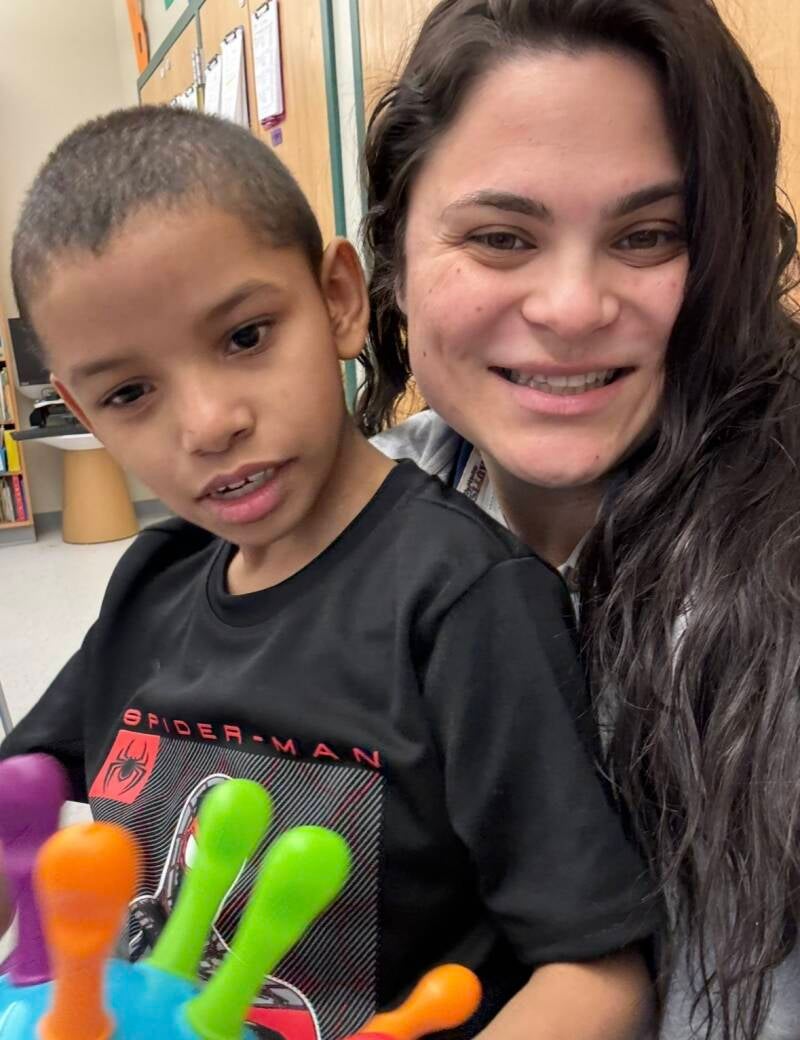

My professional journey began during graduate school, when I explored working with a variety of populations through diverse clinical placements, including a skilled nursing facility, an elementary school, and a District 75 high school.
From early on, I knew I wanted to work with children with special needs, but I also realized that being a classroom teacher wasn’t the right fit for me. I was drawn more to providing individualized support and targeted interventions rather than leading an entire classroom. I wanted the opportunity to focus closely on each child’s specific strengths and needs, build meaningful one-on-one relationships, and help students make progress in a more specialized and direct way
Throughout my tenure as a speech-language pathologist in a District 75 setting, I have had the privilege of working as part of a multidisciplinary team dedicated to placing students at the center of all decision-making. Collaboration with teachers, paraprofessionals, related service providers, and families has been essential in promoting skill generalization, independence, and long-term success for students.
Create Your Own Website With Webador